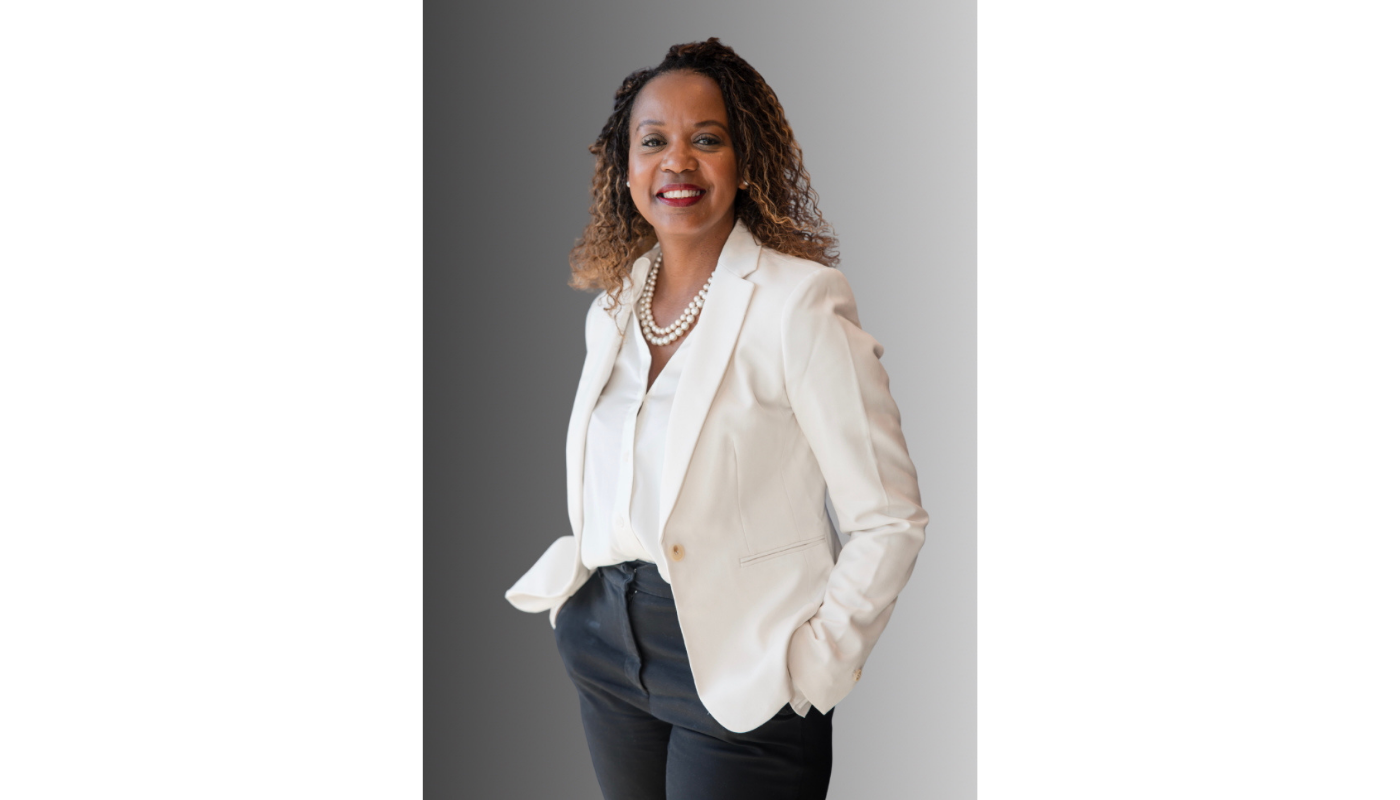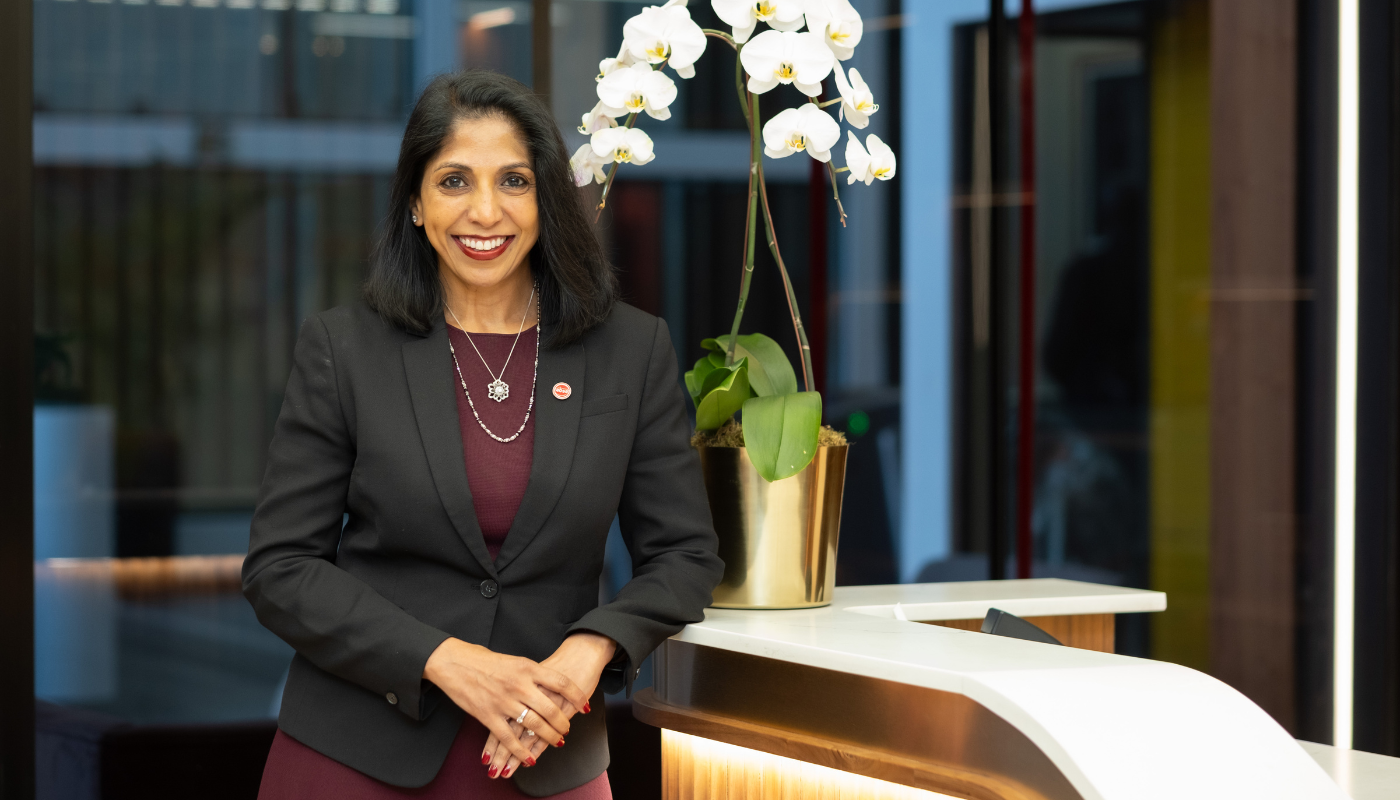
By Saloshni Pillay, Managing Executive: CIB SA, Absa Corporate & Investment Banking and Executive Sponsor: Banking on Women
South Africa has made real progress in women’s representation in leadership. Grant Thornton’s 2026 Women in Business research shows women now hold 47.3% of senior management positions in South African mid-market businesses, against a global average of 32.9%. That’s worth recognising, but the more interesting question is what happens next.
Representation thins out further up the pipeline: at the most senior executive and board levels, it still doesn’t consistently reflect the depth of female talent inside our organisations. If women are increasingly present in senior management but remain less consistently represented where the most consequential decisions are made, we need to look beyond the numbers and ask what happens to that talent on the way to the top.
For years, much of the conversation has focused on how we prepare more women for leadership. Perhaps we should also be asking whether the model of leadership we are preparing them for is still fit for purpose.
The world those careers unfold in has also changed faster than at almost any point most of us have led through. AI is reshaping industries, economic volatility is testing businesses, and workforce expectations are evolving. In this environment, leadership cannot simply be about having the most experience or the loudest voice in the room. It increasingly requires the ability to make sound judgements amid uncertainty, remain curious, bring different perspectives together and take people with you through change.
Technology accelerates change; people determine whether it delivers value. And the qualities that matter most in moments like this, judgement, empathy, resilience, curiosity and the ability to unite people behind a common purpose, remain distinctly human.
That creates an important opportunity for women. Not to become better at fitting into inherited models of leadership, but to play a greater role in shaping what leadership needs to become.
Authenticity and tenacity
Two qualities have mattered enormously in my own leadership journey: authenticity and tenacity.
Early in my career, I spent too much energy trying to please everyone, often at my own expense. What shifted things wasn’t a title or promotion. It was recognising that confidence and self-awareness matter more than constantly seeking the approval of others.
Authenticity isn’t a soft skill; it is a leadership capability. It allows leaders to set clear expectations, have difficult conversations, build trust and develop people according to their strengths rather than assumptions.
Self-awareness also forces us to examine the assumptions we bring to decisions about capability and potential, and that matters for inclusion. If our picture of a “future leader” unconsciously resembles the leaders who succeeded before them, we should not be surprised when leadership teams continue to look much the same.
Confidence usually comes after the leap
Tenacity is the other half of it. A career, particularly for women, rarely moves in a straight line. I often think of the idea, popularised by Sheryl Sandberg, that careers are jungle gyms, not ladders: we move up, sideways, sometimes backward, adapting as circumstances change.
Some of my most significant moves didn’t look like progress at the time; they required patience and the willingness to keep going when the path wasn’t obvious.
The moments that shaped me most weren’t the ones I felt ready for. Confidence, I’ve learned, is rarely the starting point. More often, confidence is what comes after we step into something that stretches us.
That matters particularly for women. We cannot always wait for certainty before putting ourselves forward or assume that someone else will recognise our potential for us. But neither should organisations make women’s advancement dependent solely on women becoming better at advocating for themselves. Opportunity is shaped by the decisions leaders make about who gets seen, stretched and backed.
Leadership is never a solo journey
I’ve been fortunate to encounter people who challenged me, opened doors, and believed in me before I believed in myself. Leadership is never a solo journey; it’s a shared one.
As careers progress, our responsibility shifts from asking who will invest in us to asking whose potential we’re prepared to invest in.
Mentorship matters, but sponsorship is equally powerful. A mentor advises you; a sponsor advocates for you and speaks about your potential when you’re not in the room.
That distinction matters because careers are not shaped by capability alone. They are also shaped by access: access to significant assignments, influential networks, decision-makers and opportunities that demonstrate what someone can do.
If we want more women reaching the most senior levels, leaders need to examine those everyday decisions. Who gets the difficult client mandate? Who is given the stretch assignment? Whose name comes up when an opportunity emerges? And whose potential are we willing to advocate for when they are not in the room?
These seemingly small decisions accumulate into careers.

Learning must move in every direction
This is also why I invest deliberately in reverse mentoring.
The world changes faster than any one generation can track alone, and some of my sharpest thinking has come from younger colleagues willing to challenge assumptions I didn’t know I was making. Experienced leaders bring context and judgement; emerging leaders bring digital fluency and fresh questions.
Neither has all the answers. That is precisely the point.
The organisations that will thrive are the ones where learning moves in every direction, not just top-down. In an AI-enabled world, the leader who assumes experience means they no longer need to learn will be overtaken by the leader whose experience has taught them to stay curious.
At Absa Corporate & Investment Banking, we see this transformation from two vantage points: within our own organisation and through the businesses and industries our clients are navigating. Across both, the lesson is increasingly clear. Technology may accelerate change, but people determine whether organisations can turn that change into value.
For a bank operating across complex markets and partnering with businesses navigating their own transformation, that makes adaptability, judgement and diverse thinking business imperatives, not simply leadership ideals.
Representation is only the beginning
Representation matters enormously. But representation alone does not tell us whether women have influence, whether they are receiving career-defining opportunities or whether they are progressing into the roles from which organisations are ultimately shaped.
As Executive Sponsor of Banking on Women at Absa CIB, one question matters to me more than the number of people who participate in an initiative: what changes because it exists?
Are more women gaining access to meaningful opportunities? Are they being sponsored into consequential roles? Are leadership pipelines becoming stronger and more representative? Are we removing barriers that may not always be obvious to those who have never had to navigate them?
That is where inclusion becomes tangible.
Flexibility, sponsorship, networks, fair access and leadership accountability all matter, but culture matters most. Policies create the conditions for inclusion. Leaders determine whether people actually experience it.
And this cannot be a conversation women have only with other women. Many of the most important sponsors and advocates throughout my own career have been men and women who saw potential, created opportunity and were prepared to challenge established assumptions.
Closing the leadership gap therefore cannot be framed as a challenge for women to solve. It requires leaders, irrespective of gender, to take responsibility for the talent they develop, the voices they amplify and the opportunities they create.
Thriving through change
Technology will continue transforming how we work, and AI will change jobs, processes, perhaps entire industries. But organisations will ultimately be defined not by the tools they adopted, but by the cultures they built, the opportunities they created and the people they empowered.
The businesses best equipped for what comes next will be those able to draw on different perspectives, challenge established thinking and develop leaders capable of navigating complexity without pretending to have every answer.
Not everyone begins their career with the same advantages. What we can control is our willingness to keep learning, stay authentic, and have the tenacity to keep moving when the path isn’t obvious.
For women, that means backing ourselves, taking the difficult assignment and sometimes stepping forward before certainty arrives. But we should be careful not to turn women’s advancement into another problem women are expected to solve.
Those of us already in positions of leadership carry an equally important responsibility: to examine who gets the opportunity, who gets the stretch assignment, whose potential we advocate for when they are not in the room, and whether our idea of what a leader looks like has kept pace with the world we are asking them to lead.
Because thriving through change isn’t about helping more women succeed in yesterday’s leadership model. It is about building a better one for what comes next.
Share via: