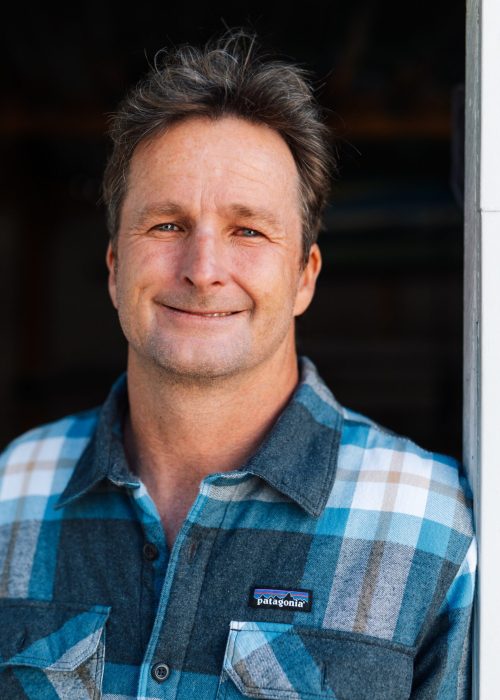
Mike Schlebach is a seasoned entrepreneur, big wave surfer, environmental activist and proud family man. Mike has a strong track record in building purpose-driven businesses. He is the co-founder and managing director of Protect The West Coast (PTWC), a nonprofit dedicated to safeguarding South Africa’s fragile West Coast against destructive mining and unsustainable development. Alongside this work, Mike has played a central role in the circular economy and sustainable manufacturing space as co-founder and managing partner of OpenSource Circular, former MD of Re Sails South Africa, and co-founder and former managing director of Sealand Gear, a globally recognized lifestyle brand built on upcycled materials. In 2021, Mike founded and is the current CEO of Screan, a pre purchase car inspection platform.
Mike’s entrepreneurial journey began in his twenties as co-founder of Southwood Joinery and partner in Burger & Schlebach Construction, ventures that laid the foundation for his commitment to craftsmanship and business development. Today, his focus remains on creating businesses and initiatives that align environmental protection, social impact, and circular design.
1. Screan was born from your own frustrating experience buying a used car. Was it simply a case of necessity being the mother of invention, or was the idea influenced by something you had seen elsewhere?
The idea for Screan actually came years before I started it. I bought a second hand car for my wife that happened to be up in Pietermaritzburg, so on the long drive down I started to think that there must be an easier way of doing this. After that it became all about timing and the experience I had trying to buy a new bakkie up in Joburg was the final catalyst some years later.
2. Take us through the early entrepreneurial journey. Screan depends on an ecosystem of partners and suppliers. What was it like bringing them on board when the business was still relatively unknown?
This was a whole new experience for me, in an industry I knew little about or connected to other than there was a gap in the automotive market. My plan was to create a gig economy business not dissimilar to Uber whereby inspections are allocated to professional inspectors(now called Screaners) that are closest to the job. The first thing I did was put a blueprint together on what I wanted the business to look like, then I brought in somebody, my old friend Mark Prevost, who could help me build the tech stack that would enable the business to move forward. Mark and I pieced the business together bit by bit utilising off the shelf technology and social media and grew it from there.
3. How difficult was it to convince those first customers that Screan could work, and how important were your own sales skills in getting the business off the ground?
Those first sales and getting a bit of traction was incredibly difficult because I was an outsider to the industry and the network I had built over the years was totally foreign. A new business is about getting in front of your family, friends and network and mine were like, what the hell Mike, your background is construction, bag manufacturing and retail, where did this come from…I had some funny conversations in the early days but ya, we managed to pull it off.
4. What has been significantly harder to build than you expected, and what has been surprisingly easier?
Building a network of experienced and professional inspectors around the country was surprisingly easier than expected and this I attribute to the socio economic conditions and unemployment rate in the country. Also, there are alot of people that love cars and are very knowledgeable. The hard part was keeping the good Screaners engaged and onboard as it was slim pickings in the beginning.
5. What is the biggest mistake you’ve made building Screan, and what did it cost you?
When I look back on this journey, there aren’t any glaring mistakes that I can see, but that’s not to say I haven’t made any. I’ve taken a slow approach with building Screan and we are on track to build an innovative platform that provides an incredible public service offering, is customer service centric and provides meaningful employment opportunities in a country that really needs it.
6.What have you learnt about the South African second-hand vehicle market that the average buyer probably doesn’t know?
I would say that the industry is made up of good and bad players and is currently going through a major transition. With inspections services like Screan and buying platforms like Change Cars, who vet their dealers before they are allowed to sell on their platform, the car buying public is far better informed and empowered not to buy a lemon. The only thing the public needs to do is use these services.
7. As Screan grows, how do you scale a business built on trust without losing control of the quality that created that trust in the first place?
We’ve taken our time building Screan with a robust tech stack and processes that can handle high volumes for the time being. Up until now, Screan has been focussed quite heavily on our B to C business but the major growth will come from B to B, which is the big focus going forward.
8. Where to next for Mike Schlebach? Is there another problem or opportunity you’re already thinking about?
I’ve got my hands full right now with the three main projects I’ve started since I exited Sealand Gear in 2020. Protect The West Coast NPC, Screan and OpenSource Circular are all still in the start up stage and keeping me honest for the time being, but ya, I’ve got a few new ideas floating around my head and who knows when the right time might be to bring them to life.
Share via:
