COMRiC releases a six-part video series for Cybersecurity Awareness Month, showing South Africans the scams now reaching their inboxes, phones and family WhatsApp groups.
The email has no spelling mistakes. The caller already knows your name, your bank and your card number. The voice note sounds exactly like your CEO. The fraud of 2026 doesn’t look like fraud and that is the point.
To help consumers recognise it, the Communications Risk and Information Centre (COMRiC), the not-for-profit body that brings South Africa’s major telecommunications operators together to tackle shared crime and security risks, has released a six-part video series for Cybersecurity Awareness Month. Each episode runs about a minute, follows one real-world scam from first contact to the moment it lands and ends with the few simple steps that would have stopped it.
The series comes as COMRiC’s Telecommunications Sector Report 2026 shows subscription fraud rising 307% in a year, to 14 897 cases, alongside 8.72 billion spam calls in the first quarter of 2026 alone.
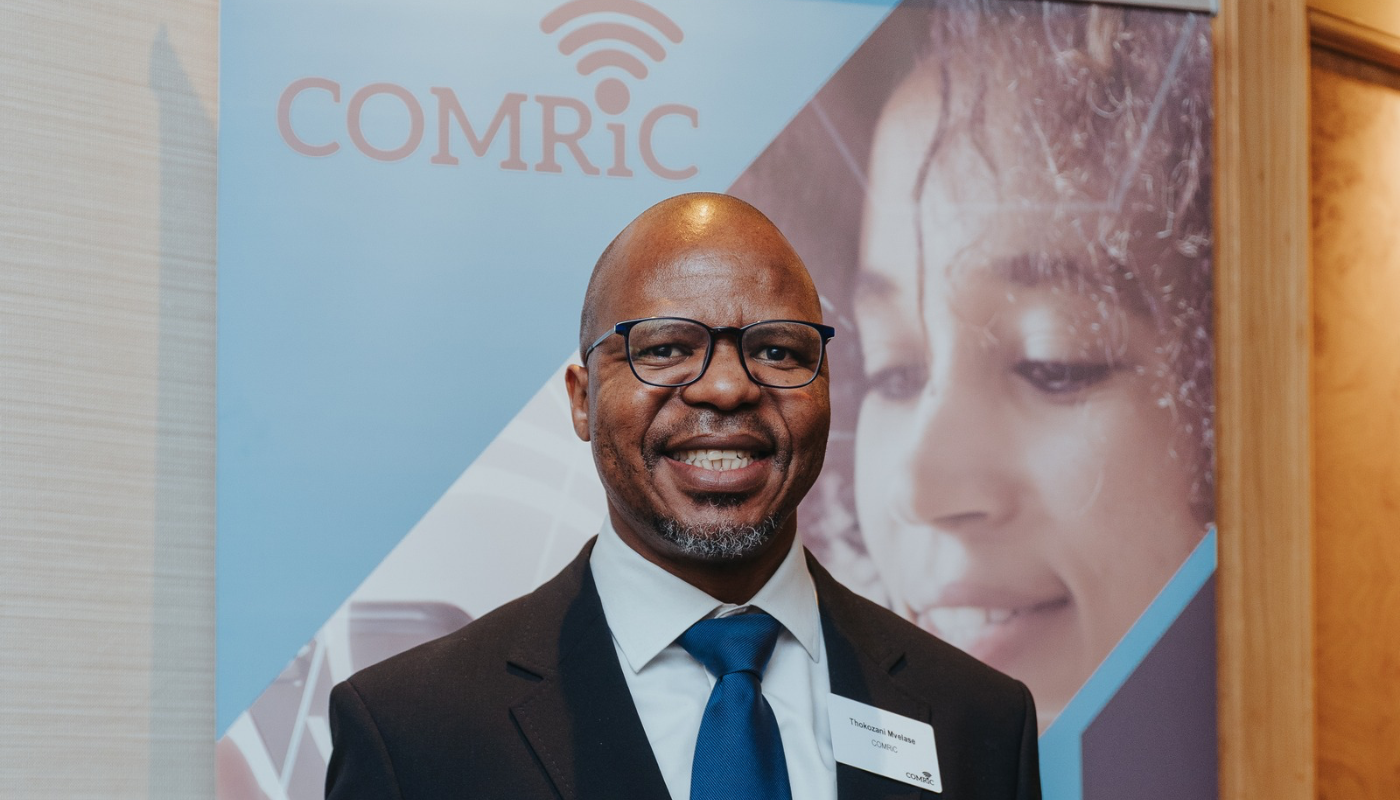
COMRiC CEO Advocate Thokozani Mvelase says: “Criminals are reaching more people, more often and they are doing it through channels that consumers know and trust. Technology alone cannot solve a problem where human trust itself has become the attack surface.”
The full series is available here: https://comric.co.za/think-before-you-click/

Episode 1: The click starts with an email from “IT”: your password expires in two hours, verify now. Because it was written with AI, there are no typos or clumsy phrasing to give it away. The lesson is to stop before you click, check the link and the sender’s real address and report the message rather than act on it.
Episode 2: The call is from a woman in your bank’s fraud department. She already has your name, your bank and your card details, and all she needs is the one-time PIN just sent to your phone. That OTP is the last key to your account, and in a SIM swap it lets criminals take over your number too. Your bank will never ask for it. Hang up and call back on the number printed on your card.
Episode 3: The message comes in as “Hi Ma, it’s me. This is my new number.” The sender says their phone broke, needs money urgently, and has a reason why you can’t call. Before paying, call your child on the number you already have. Never share the WhatsApp verification code sent to your phone and switch on two-step verification so nobody can hijack your own account.
Episode 4: The voice note sent by the CEO asks for an urgent, confidential payment. He never recorded it: COMRiC made it with AI, from a few seconds of audio. When a voice can be faked, process has to replace trust. Call back on a number you already have, agree a safe word with family and colleagues and require a second approval for every payment.
Episode 5: The lock happens on every screen in the office on a Monday morning. The attack began eleven days earlier with one click on a fake IT email. The criminals then quietly worked through the network, from email to payroll, client files and backups, before demanding payment. South Africa recorded 17 849 ransomware detections in 2024, the most in Africa. Stolen passwords, unpatched software and malicious email are the most common ways in. The defence: stop before opening unexpected attachments, install updates when they arrive, turn on multi-factor authentication and if something looks wrong, disconnect and report it immediately.
Episode 6: The share is an election special. A voice note is forwarded to the family group: voting stations have moved and you must confirm your details on a link by Friday or you can’t vote on 4 November. None of it is true. Ahead of the Local Government Elections, check voting information only on the IEC’s official website, never share your ID number through a link and report fakes to Real411 instead of forwarding them.
The six scams look different, but they share a pattern: urgency, secrecy and a request to act before you can check. Every episode closes with the same habit. Pause, verify through a channel you already trust and report what you see.
“Where the sector shares intelligence, coordinates its response and acts collectively, we are seeing tangible results. But criminals adapt. The best protection a consumer has is the moment they stop and ask whether this is real,” says Mvelase.
Share via: