Executive summary
Securing business funding is not about applying everywhere. It is about aligning three things: your funding need, your stage of business growth, and your level of funding readiness. When these elements align with the right funding provider, the path to capital becomes clearer, faster and significantly more achievable.
South Africa offers a diverse funding ecosystem, including development finance institutions, commercial banks, alternative lenders, enterprise and supplier development programmes, angel investors, venture capital funds and private equity. Each serves a different purpose and is suited to different business types, sectors and stages of growth.
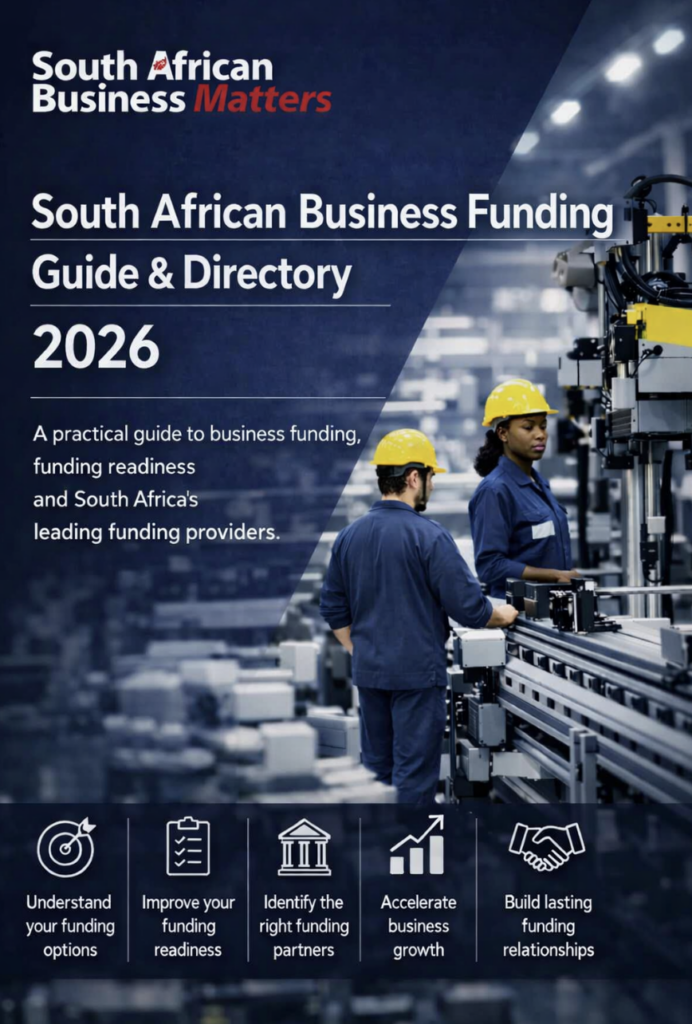
This guide is designed to help you navigate that landscape with confidence. It explains how business funding works, what funders look for, how to prepare a stronger application, which funding routes are best suited to different business needs, and how to avoid the common mistakes that derail applications. It also includes a practical directory of South African funding organisations to help you identify and shortlist the most appropriate funding partners.
This guide is designed for South African entrepreneurs, startups, SMEs and established businesses seeking to better understand their funding options, improve their funding readiness and approach potential funders with greater confidence.
It is particularly relevant to:
- Startups seeking early stage funding or market access
- SMEs requiring working capital, equipment finance or growth funding
- Black-owned, youth-owned and women-owned businesses exploring development finance opportunities
- Technology and innovation-driven businesses preparing to engage with angel investors, venture capital funds or innovation agencies
- Established businesses planning expansion, acquisitions or large capital projects
Business funding in South Africa is available, but not every funding option suits every business. A startup testing demand needs a different approach from a manufacturer buying equipment, an SME delivering a contract or an established company expanding nationally.
The challenge is not simply finding funding. It is finding the right type of funding for your stage, sector, risk profile and growth plan.
One of the biggest misconceptions among business owners is that all funding providers assess businesses in the same way. They do not. Every funder has its own mandate, investment criteria and appetite for risk. Understanding these differences is often the first step towards a successful funding application.
While funding products vary, most providers evaluate businesses against three fundamental criteria:
Funders evaluate:
- Risk
- Evidence
- Fit with mandate
Understanding these three principles will help you identify the most appropriate funding route, prepare stronger applications and focus your efforts on funders that are most likely to support your business.
South Africa’s funding ecosystem is broad, spanning government agencies, development finance institutions, commercial banks, SME lenders, enterprise and supplier development programmes, angel investors, venture capital funds and private equity. Each serves a different purpose, has its own investment mandate, and is designed to support businesses at different stages of growth. Understanding these distinctions is essential when deciding where to apply for funding.
Government and development finance
Institutions such as IDC, NEF, TIA, NYDA and SEDA support economic growth, job creation, transformation, innovation and industrial development. Funding from these organisations can be highly attractive; however, applications are usually detailed, evidence-based, and often require businesses to demonstrate alignment with the organisation’s mandate.
Commercial banks
Banks typically support businesses that can demonstrate a trading history, sound financial records, consistent revenue and the ability to repay debt. They are often best suited to SMEs and established businesses with proven cash flow and a clear borrowing requirement.
Alternative finance providers
Alternative lenders often offer faster decisions, simpler application processes and flexible products such as working capital finance, merchant cash advances and revenue based finance. These solutions are particularly valuable for businesses that need speed or do not yet meet traditional bank lending criteria.
Enterprise and supplier development
Enterprise and Supplier Development (ESD) programmes can provide funding, mentorship, training, supplier opportunities and market access. For many SMEs, securing a long-term customer or supply agreement can be just as valuable as receiving funding.
Angel investors
Angel investors invest their own capital in exchange for equity. They typically look for capable founders, innovative ideas, scalable business models and strong growth potential. Many also provide mentorship, industry expertise and valuable business networks alongside their investment.
Venture capital and private equity
Venture capital is primarily aimed at scalable technology and other high growth businesses with significant expansion potential. Private equity typically invests in larger, established companies seeking capital for expansion, acquisitions or strategic growth.
While venture capital attracts significant attention, it is suitable for only a relatively small proportion of businesses. Most successful companies secure funding through other channels, and that is entirely normal.
One of the most common reasons funding applications fail is that businesses approach the right funding provider at the wrong stage of their journey. Every funder has a different appetite for risk and a different investment mandate. Understanding where your business fits today will help you focus on the funding options most likely to support your growth.
Stage | Characteristics | Starting points | Focus areas |
Idea | Concept stage, little or no revenue, limited trading history | Seda, NYDA, TIA, incubators, accelerators | Planning, market validation, mentorship, skills development |
Startup | Early trading, limited trading history, first customers, early traction | NYDA, SEDFA, ESD programmes, FundingHub, alternative lenders | Working capital, equipment, early growth |
Growth | Proven model, consistent revenue | Business Partners, commercial banks, Lula | Expansion, recruitment, equipment, entering new markets |
Established | Several years trading, strong financial performance | IDC, commercial banks, Business Partners, private equity | Expansion, acquisitions, facilities, large capital projects |
Your business stage should guide your funding strategy. Applying too early can result in unnecessary rejection, while waiting too long may cause you to miss valuable growth opportunities.
Tip: Focus on the funding options that align with your business as it exists today, rather than where you hope it will be tomorrow.
Businesses often focus on who provides funding before clearly defining what they need funding for. In reality, identifying your funding requirement is one of the most important steps in selecting the right funding partner.
Whether you need working capital, equipment finance, innovation funding or support to fulfil a major contract, different funding providers specialise in different types of funding. Matching your funding need to the most appropriate funding route will improve both the quality of your application and your chances of success.
Funding need | Best starting Points | Why it fits |
Youth startup funding | NYDA, Seda, incubators | Designed for early stage entrepreneurs requiring support, mentorship and funding readiness. |
Black‑owned business funding | NEF, ESD programmes, development finance | Strong alignment with transformation, supplier development and inclusive economic growth objectives. |
Working capital | Lula, banks, alternative lenders, FundingHub | Well suited to cash flow gaps, inventory, operational expenses and short-term business growth. |
Manufacturing / industrial expansion | IDC, commercial banks, development finance | Designed for machinery, facilities, production capacity and large capital investment projects. |
Technology / innovation funding | TIA, angels, VC funds, accelerators | Appropriate where innovation, scalability and commercialisation potential are key funding drivers. |
Tender / contract delivery | Contract finance and trade finance providers | Suitable where confirmed contracts or purchase orders require upfront funding to deliver successfully. |
Not every funding provider supports every funding need. Taking the time to identify the most appropriate funding route before submitting an application can save considerable time, improve the quality of your funding strategy and significantly increase your likelihood of securing finance.
Every funding product is designed to solve a different business challenge. Before deciding where to apply, first determine what you need the funding to achieve.
Avoid choosing funding simply because it appears to be the fastest, cheapest or most widely discussed. The most appropriate funding solution is the one that best matches your business objective, cash flow requirements and long-term growth plans.
Funding type | Repayment? | Equity? | Best for |
Grants | No | No | Specific qualifying projects |
Loans | Yes | No | Growth and expansion |
Asset finance | Yes | No | Equipment, vehicles and machinery |
Working capital finance | Yes | No | Cash‑flow gaps and day-to-day operations |
Contract finance | Yes | No | Confirmed contracts and purchase orders |
Angel investment | No | Yes | Early stage startups and innovation |
Venture capital | No | Yes | High growth, scalable technology businesses |
Private equity | No | Yes | Established businesses pursuing expansion or acquisitions |
Choosing the right funding product is just as important as choosing the right funding provider.
A targeted funding strategy is almost always more effective than a broad one. Five well-matched applications are far more likely to succeed than twenty generic submissions to organisations whose funding criteria do not align with your business.
Tip: The cheapest funding is not always the best funding. Consider flexibility, repayment terms and the long-term impact on your business.
Funders are not simply looking for businesses that need money. They are looking for businesses that demonstrate the ability to use funding effectively and, where applicable, repay it or generate an appropriate return.While every funding provider has its own criteria, most assess applications against a common set of principles. A business plan can be helpful, but clarity, credibility and evidence are often far more important than the length of the document.
Funders want to understand:
- What your business does
- Who your customers are
- How you generate revenue
- Why funding is needed
- How the funding will be used
- How the business will repay debt or deliver growth
What funders look for | What it means | Why it matters |
Evidence of demand | Sales, customer traction, contracts, letters of intent, repeat customers | Demonstrates that the business solves a real problem and has paying customers. |
Financial discipline | Clean financial records, bank statements and cash flow management | Reduces risk and shows the business can manage capital responsibly. |
Founder capability | Skills, experience and a proven ability to execute | Funders invest in people as much as they invest in businesses. |
Clear use of funds | A specific, justified and costed funding request | Enables funders to understand exactly how the capital will be applied. |
Repayment ability (for loans) | Cash flow, profit margins and revenue stability | Demonstrates the business can comfortably service debt. |
Scalability (for equity) | Growth potential, market size and competitive advantage | Indicates the potential to generate attractive investor returns. |
Compliance | CIPC registration, tax compliance, BEE status and relevant licences | Non-compliance can prevent an application from progressing. |
Fit with mandate | Alignment with the funder’s objectives and investment criteria | Funders only support businesses that align with their strategic mandate. |
Funders want to see demand, compliance, financial discipline, repayment ability, a clear plan and alignment with their mandate.
Tip: A concise, evidence-based application will usually outperform a lengthy business plan filled with unsupported assumptions.
Many funding applications fail long before a funder assesses the quality of the business. In many cases, rejection is the result of avoidable mistakes that signal poor preparation, weak financial management or a lack of alignment with the funder’s requirements.
Understanding these common pitfalls can help you prepare a stronger application, focus your efforts on the right funding opportunities and improve your chances of success.
Common mistake | Description | Impact |
Applying too early | No traction, no records or limited market validation | Immediate rejection |
Applying everywhere | Scattershot approach without matching the funder’s mandate | Wastes time and damages credibility |
Weak financials | Missing statements, inconsistent figures or no cash flow visibility | Funders cannot properly assess risk |
Overstated projections | Unrealistic revenue forecasts or unsupported assumptions | Signals inexperience or weak financial discipline |
No clear use of funds | Vague, inflated or poorly justified funding request | Funders cannot justify approving the application |
Chasing venture capital too soon | Seeking equity funding before demonstrating market demand | Leads to rejection and wasted effort |
Poor documentation | Missing compliance documents or outdated records | Delays or prevents the application from progressing |
Not understanding funder mandates | Applying to organisations that do not fund your type of business | Little or no chance of approval |
Tip: Most funding challenges can be traced back to three underlying issues: poor preparation, poor alignment or insufficient evidence. Businesses that address these areas before applying are significantly more likely to secure funding.
Submitting an application is only one part of the funding process. The quality of your preparation often has a greater influence on the outcome than the application itself.
The following actions can significantly improve your funding readiness, strengthen your application and increase your chances of securing finance.
Strengthening area | What to do | Outcome |
Improve financial clarity | Ensure your financial statements are accurate, reconcile accounts and prepare realistic cash flow forecasts | Gives funders confidence in your financial management |
Build traction | Secure early customers, pilot projects, letters of intent or repeat business | Demonstrates market demand and reduces perceived risk |
Tighten your funding request | Ask only for the amount you can clearly justify and support | Improves credibility and increases the likelihood of approval |
Prepare a strong pitch | Clearly explain the problem, solution, market opportunity, business model, team and financials | Demonstrates professionalism and funding readiness |
Align with the right funder | Apply only to organisations whose mandate matches your business and funding requirement | Increases application quality and improves success rates |
Strengthen compliance | Keep tax, BEE status, licences and registrations current | Removes administrative barriers and unnecessary delays |
Demonstrate execution | Showcase milestones, customer wins, partnerships and measurable progress | Shows that the business can deliver on its plans |
Reduce risk | Strengthen governance, internal controls, insurance and key supplier relationships | Makes the business more attractive to lenders and investors |
Funding readiness is not achieved overnight. It is built through consistent preparation, sound financial management and a clear understanding of what funders expect.
Tip: The stronger your business fundamentals, the stronger your funding application is likely to be.
Before submitting a funding application, take a final step back and assess whether your business is genuinely funding ready. The checklist below summarises the core information and documentation that most funders expect to see, regardless of the type of funding you are seeking.
Use this checklist as a final quality control step before approaching any funding provider. Addressing gaps in advance can significantly strengthen your application and reduce the likelihood of unnecessary delays or rejection.
Readiness area | What you need | Why it matters |
Registration and compliance | CIPC registration, tax clearance, BEE certificate and relevant industry licences | Funders cannot support businesses that are not compliant. |
Financial records | Six to twelve months of bank statements, management accounts and annual financial statements | Enables funders to assess financial performance, risk and repayment ability. |
Evidence of demand | Sales history, contracts, purchase orders, letters of intent or customer feedback | Demonstrates that the business has genuine market demand. |
Business plan or pitch deck | A clear business model, market overview, pricing, operations, team and financial projections | Shows funders that you understand your business and growth strategy. |
Use of funds | A detailed breakdown of how the funding will be used | Provides clarity and justification for the funding request. |
Cash flow forecast | A realistic 12-24 month cash flow projection with supporting assumptions | Demonstrates sustainability and repayment capacity where applicable. |
Founder readiness | Commitment, availability, relevant experience and the ability to execute | Funders invest in capable founders as much as they invest in businesses. |
Risk mitigation | Appropriate insurance, governance, internal controls and supplier agreements | Reduces risk and improves confidence in the business. |
Choosing the right funding provider is about far more than identifying an organisation that has money available. The most successful funding applications are those where the business, the funding requirement and the funder’s mandate are closely aligned.
Before approaching any funding organisation, consider the following factors.
Decision factor | What to consider | Why it matters |
Business stage | Idea, startup, growth or established | Different funders support businesses at different stages of development. |
Funding need | Working capital, equipment, expansion, innovation or contract delivery | Determines the most appropriate funding product and provider. |
Sector | Manufacturing, technology, services, retail, agriculture or other industries | Many funders specialise in particular sectors or industries. |
Mandate alignment | Youth-owned, black-owned, women-owned, job creation, innovation or regional development | Funders only support businesses that align with their investment mandate. |
Speed required | Immediate funding versus a longer application process | Banks and development finance institutions often have longer approval timelines, while SME lenders can usually respond more quickly. |
Cost of capital | Interest rates, fees, equity dilution and repayment terms | The cheapest funding is not always the most appropriate over the long term. |
Risk appetite | The level of risk a funder is willing to accept | Determines whether your business is likely to meet the funder’s investment criteria. |
Documentation required | Financial records, compliance documents and supporting information | Being properly prepared can significantly reduce delays and improve the quality of your application. |
The South African funding landscape is diverse, with different organisations supporting different business types, sectors and stages of growth. Rather than applying broadly, use this directory to identify the organisations whose mandate best aligns with your business and funding requirements.
Where possible, visit each organisation’s website to review its latest eligibility criteria, application process and supporting documentation before submitting an application.
Government & DFIs
Government agencies and development finance institutions typically focus on economic development, job creation, transformation, industrial growth and innovation. While application processes can be more detailed, they often provide highly competitive funding and support.
Funder | What they fund | Who it’s for | Products offered | Website |
IDC | Manufacturing, industrial projects, agroprocessing, energy | Established businesses | Welcome to IDC New | www.idc.co.za |
NEF | Blackowned businesses | 51%+ black ownership | Loans, equity, franchise funding | www.nefcorp.co.za |
SEFA | Working capital, equipment | Startups and SMEs | Loans, asset finance, bridging finance | www.sefa.org.za |
NYDA | Youthowned startups | Ages 18–35 | Grants, mentorship | www.nyda.gov.za |
TIA | Innovation, prototypes, commercialisation | Tech startups | Grants, seed funding | www.tia.org.za |
SEDA | Business support, incubation | Startups and SMEs | Nonfinancial support | www.seda.org.za |
Commercial banks
Commercial banks are generally best suited to businesses with an established trading history, reliable financial records and the ability to service debt.
Bank | What they fund | Who it’s for | Products offered | Website |
Standard Bank | SMEs with revenue | Established businesses | Loans, overdrafts, asset finance | www.standardbank.co.za |
FNB | SMEs and growing businesses | Businesses with cash flow | Loans, revolving credit | www.fnb.co.za |
Nedbank | SMEs and midmarket | Businesses with financial history | Term loans, asset finance | www.nedbank.co.za |
Absa | SMEs and corporates | Businesses with revenue | Loans, overdrafts, trade finance | www.absa.co.za |
Capitec Business | SMEs | Small businesses | Merchant finance, loans | www.capitecbank.co.za |
SME lenders & alternative finance
Alternative finance providers often offer faster turnaround times and flexible funding solutions, making them particularly suitable for businesses requiring working capital or shorter-term finance.
Lender | What they fund | Who it’s for | Products offered | Website |
Lula | Working capital | SMEs with turnover | Revenue based finance | www.lula.co.za |
Bridgement | Shortterm finance | SMEs | Working capital, invoice finance | www.bridgement.com |
Retail Capital | Merchantbased businesses | SMEs with card turnover | Merchant cash advance | www.retailcapital.co.za |
FundingHub | Loan marketplace | SMEs | Compares multiple lenders | www.fundinghub.co.za |
ProfitShare Partners | Contract and PO finance | SMEs delivering contracts | PO finance, contract finance | www.profitsharepartners.com |
Contract & tender finance
These providers specialise in helping businesses fulfil confirmed contracts and purchase orders by providing access to working capital and contract finance.
Funder | What they fund | Who it’s for | Products offered | Website |
ProfitShare Partners | Purchase orders, contracts | SMEs with confirmed orders | PO finance, contract finance | www.profitsharepartners.com |
Lula | Contract delivery | SMEs | Revenue based contract finance | www.lula.co.za |
Business Partners | Contract delivery, equipment | SMEs | Contract finance, asset finance | www.businesspartners.co.za |
Many large South African corporates operate Enterprise and Supplier Development programmes that combine funding with mentorship, supplier development and market access opportunities.
Corporate | What they support | Who it’s for | Support offered | Website |
SAB Foundation | Social innovation, entrepreneurship | SMEs, social enterprises | Grants, training, incubation | www.sabfoundation.co.za |
Telkom Future Makers | Tech and digital businesses | SMEs and startups | Funding, incubation, market access | www.telkom.co.za |
Sasol ESD | Energy, manufacturing, services | SMEs in Sasol value chain | Funding, supplier opportunities | www.sasol.com |
AB InBev ESD | FMCG value chain suppliers | SMEs | Funding, supplier development | www.ab-inbev.com |
Tiger Brands ESD | Food value chain | SMEs | Supplier development, funding | www.tigerbrands.com |
Shoprite ESD | Retail suppliers | SMEs | Market access, supplier development | www.shopriteholdings.co.za |
Angel investors typically invest their own capital in promising early stage businesses with strong founders and significant growth potential.
Angel network | What they fund | Who it’s for | Investment type | Website |
Jozi Angels | Early stage startups | High growth founders | Equity | www.joziangels.co.za |
Dazzle Angels | Womenled startups | Female founders | Equity | www.dazzleangels.com |
Angel Hub | Tech and scalable ventures | Startups | Equity | www.angelhub.co.za |
Venture capital firms generally invest in scalable, high growth businesses, particularly within the technology sector. Most venture capital investments involve taking an equity stake in the business.
VC fund | What they fund | Who it’s for | Investment type | Website |
Knife Capital | Scaleups, tech, high growth | Established, scaling tech ventures | Equity | www.knifecap.com |
Kalon Venture Partners | Digital, platforms, tech | Scalable tech startups | Equity | www.kalonvp.com |
4Di Capital | Early stage tech | Startups with strong tech products | Equity | www.4dicapital.com |
HAVAÍC | Tech, SaaS, digital | African tech startups | Equity | www.havaic.com |
Naspers Foundry | South African tech & platforms | High growth SA tech businesses | Equity | www.naspers.com |
Accelerators and incubators help businesses become investment-ready by providing mentorship, training, business development support and access to investor networks.
Programme | What they support | Who it’s for | Support offered | Website |
m Lab | Tech, mobile innovation | Early stage tech startups | Incubation, training, mentorship | www.mlab.co.za |
Grindstone | Scaleups | Growthstage businesses | Acceleration, coaching, networks | www.grindstonexl.com |
Launch Lab | Innovation, tech, ventures | Startups and innovators | Incubation, mentorship, ecosystem | www.launchlab.co.za |
Smart Xchange | ICT, digital, media | SMEs in digital sectors | Incubation, support | www.smartxchange.co.za |
The following questions address some of the most common concerns raised by entrepreneurs and business owners seeking funding. While every funding provider has its own requirements, these answers provide practical guidance to help you prepare and make more informed funding decisions.
Question | Answer |
Why is it hard to get funding? | Funders manage risk, not cash flow problems. They need evidence that your business can use funding effectively and, where applicable, repay it or generate an appropriate return. |
Is there money available in South Africa? | Yes. South Africa has a broad funding ecosystem, but funding is targeted according to business stage, sector, mandate and funding readiness. |
Why do applications get rejected? | The most common reasons are weak financial records, limited market traction, applying to the wrong funder, poor documentation or an unclear use of funds. |
Fundability vs needing funding
Question | Answer |
Why won’t funders help if I need money? | Needing funding alone is not a funding case. Funders want evidence that your business can use capital effectively and deliver the expected outcomes. |
What does “fundable” mean? | A fundable business demonstrates market demand, sound financial management, capable leadership and alignment with the funder’s investment criteria. |
Can I become fundable? | Yes. By strengthening your financial records, building customer traction, improving compliance and presenting a clear funding case, you can significantly improve your funding readiness. |
Choosing the right funder
Question | Answer |
Who should startups approach first? | NYDA, Seda, incubators, ESD programmes and, where appropriate, SEFA or alternative SME lenders are often the best starting points. |
Who should growing SMEs approach? | Business Partners, commercial banks, SME lenders such as Lula and relevant development finance institutions are often appropriate. |
Who should technology innovators approach? | Technology businesses should generally begin with TIA, innovation programmes, angel investors and, once they have demonstrated traction, venture capital funds where appropriate. |
How much to ask for
Question | Answer |
How do I know how much to ask for? | Start with your business plan. Cost your funding requirements carefully and include a realistic contingency where appropriate. |
Is asking for more better? | No. Over-asking without clear justification increases perceived risk and can weaken your application. |
What if I ask for too little? | Under-capitalising a business can slow growth, but funders generally prefer a well-justified funding request supported by realistic assumptions. |
Documentation
Question | Answer |
What are the minimum documents needed? | Most funders expect CIPC registration, tax information, bank statements, financial records and either a business plan or a concise pitch deck. Requirements vary by funder. |
Do I need audited financial statements? | Not always. Many funders accept management accounts, provided they are accurate, current and professionally prepared. |
Do I need a full business plan? | Sometimes. Increasingly, a well-prepared pitch deck supported by robust financial information is sufficient. |
Timelines
Question | Answer |
How long does bank funding take? | Typically between four and twelve weeks, depending on the lender and the complexity of the application. |
How long do development finance institutions take? | Three to six months is common, although more complex applications may take longer. |
How long do SME lenders take? | Some alternative lenders can provide decisions within 24 to 72 hours once all required documentation has been submitted. |
Equity
Question | Answer |
Should I give away equity early? | Only if the investor brings meaningful capital, expertise, strategic value or access to networks that justify the dilution of ownership. |
Is equity cheaper than debt? | Not necessarily. While there are no loan repayments, equity represents permanent ownership in your business and should be considered carefully. |
When does equity make sense? | Equity funding is generally most appropriate for scalable, high growth businesses that require significant capital and can benefit from experienced investors and strategic support. |
Securing business funding is rarely about finding the perfect application or the perfect funder. It is about understanding your business, preparing thoroughly and approaching the right funding providers with a clear, credible and well-supported funding case.
The businesses that consistently secure funding understand their stage of growth, identify the right funding need, select funding partners whose mandates align with their objectives, prepare strong documentation, demonstrate market demand and apply strategically rather than opportunistically.
While no funding application is ever guaranteed, good preparation significantly improves the odds. Every improvement you make to your financial records, business planning, compliance, customer traction and funding readiness strengthens your position with potential funders.
Funding is not about luck. It is about alignment, readiness and evidence.
Use this guide as a practical reference throughout your funding journey. Return to it as your business grows, your funding needs evolve and new opportunities emerge. The stronger your business becomes, the stronger your funding opportunities will become.
Keep this guide as a working reference. As your business evolves, revisit it to reassess your funding needs, strengthen your readiness and identify new funding opportunities. The stronger your business becomes, the more funding options become available.
Share via: