Finding a buyer online is easy. Establishing whether payment is genuine, a parcel was sent and a dispute can be resolved is often much harder.
A second-hand sale may start with an online listing, a few messages and an agreed price. But the difficult questions tend to come afterwards: Has the buyer actually paid? Is the tracking number genuine? What happens if the parcel arrives damaged, contains the wrong item or never arrives at all?
These are practical trust problems for ordinary households and small traders. In informal transactions, payment, delivery and communication often happen on different services, leaving buyers and sellers to piece together their own evidence if something goes wrong.
Pakstoor, a South African marketplace preparing for a public launch in November 2026, is approaching that gap as a transaction-design problem. Instead of treating the listing as the whole service, it aims to connect payment, delivery, inspection and dispute handling within one deal record.
A transaction that can be followed from end to end
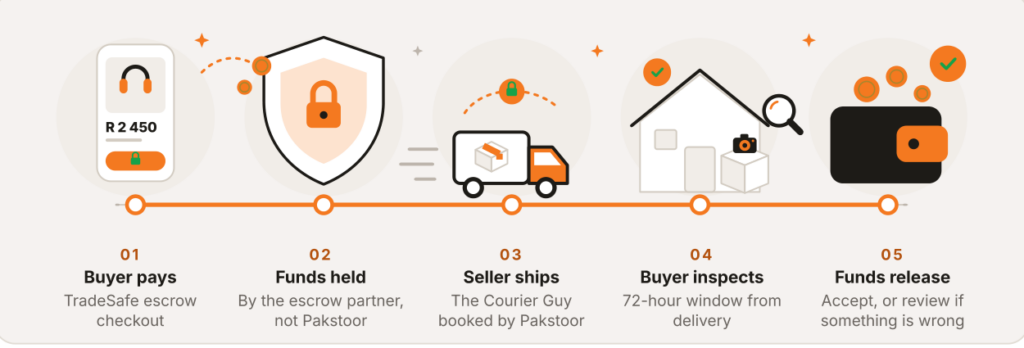
Under Pakstoor’s courier process, a buyer pays through TradeSafe, an independent escrow provider. The seller is instructed to dispatch only once the logged-in deal shows that funds are secured. Pakstoor then books delivery through The Courier Guy and makes waybill and tracking updates available within the transaction.
After courier-confirmed delivery, the buyer has a 72-hour inspection period to accept the item or report a problem. If a formal review is opened, funds remain with the escrow provider while evidence from the parties and the courier record is assessed. For qualifying in-person transactions, both parties confirm the handover within their accounts before funds are released.
What affordable access looks like
Cost matters on both sides of a small transaction. Pakstoor currently charges private sellers no listing fee or sales commission. Buyers pay a 2.5% protection fee calculated on the item price, plus TradeSafe’s separate payment-processing fee and delivery where applicable. TradeSafe’s published method rates range from 0.75% for manual EFT to 3.5% for SnapScan, before VAT on the processing fee. The full amount depends on the payment method and is displayed before payment.
For entrepreneurs, the platform also offers Local Businesses, a branded storefront for registered businesses and sole proprietors at R199 per year. This is a different service from free private selling. A small operator can present products under a business identity without first commissioning a standalone e-commerce website. In-stock product sales use the protected transaction flow; made-to-order purchasing and booking/payment for services and equipment rentals are planned additions rather than completed capabilities.
Protection has limits
An escrow arrangement does not establish that an item is genuine or in good condition, and a dispute process cannot guarantee a refund. Courier delivery does not include automatic shipping insurance. The model is intended to create clearer responsibilities, recorded steps and a route to reviewing evidence, not to remove every risk in trading with strangers.
Pakstoor is targeting public launch on 18 November 2026, subject to final end-to-end testing. Whether the model changes buying habits will depend on reliability and adoption after launch. Its underlying question is one worth asking across South Africa’s resale economy: should a successful listing also come with a dependable way to complete the deal?
Share via: