By Georgina Joy Read
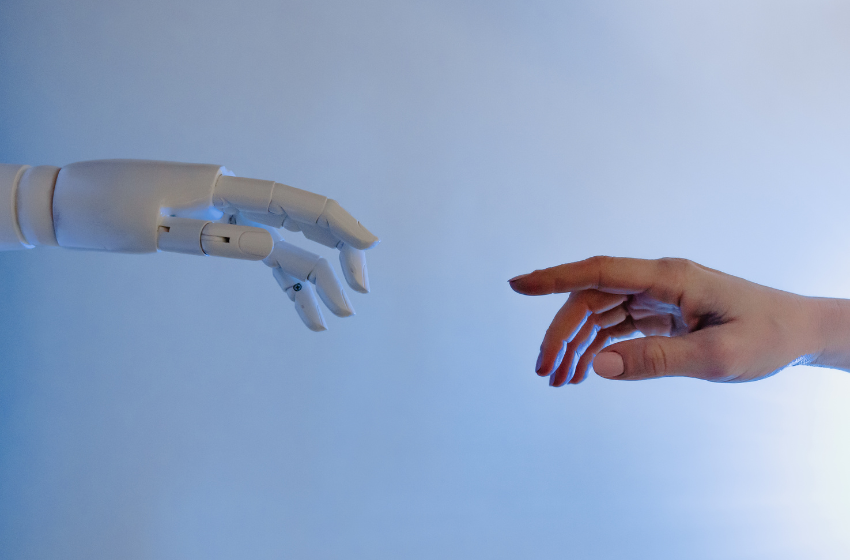
We keep hearing the same line: “AI will never replace humans — because it can’t empathise. It can’t copy what makes us human.”
Really? I’m not so sure.
I heard a conversation on Cape Talk this week where someone suggested that AI wouldn’t threaten call centre jobs because it lacks the emotional nuance to calm an angry caller. The word they used was “empathise.” It was suggested that a hybrid way of working may come about but nothing can replace the “human” element.
The irony is: humans aren’t exactly great at empathy. The ones who are, they’ve learned to be. Empathy, like all behaviour is a learned response.
So if a human can learn to respond with calm instead of anger — why can’t a machine?
What, exactly is empathy?
We often speak about empathy as though it’s a mystical quality — something that makes us uniquely human. But empathy isn’t magic, it’s just a behaviour. And like all
behaviours, it can be learned. By humans — and by machines. It’s listening.
Responding. Regulating tone. Recognising signals and situations. Giving space without judgement for someone to express themselves. And, most importantly, it’s choosing a calm response over a reactive one — through training and practice.
We learn empathy. It is not naturally embedded within us. Some people remain
unempathetic not because they can’t be, but because they choose not to be — or were never taught to value it.
If humans can learn empathy, machines can too. Perhaps even more reliably so. AI doesn’t need to recover from a bad day. It doesn’t need a break between calls. It doesn’t get tired. It’s always ready.

What, We’re Really Afraid Of?
Our perceived fear is that AI will replace us – making us irrelevant, useless, pointless in the world. Traditionally humans consider themselves as important, the most important on the planet – and here comes something humans built that may usurp our source of income. We can’t imagine how we will survive without the work we know.
Geoffrey Hinton, often referred to as the “Godfather of AI,” recently left Google and began publicly warning about AI’s emotional and cognitive capacities. He’s raised concerns that AI bots are better at learning than humans are – and that means at some point they will become more intelligent. AI may not sweat or cry — but its responses can mirror our emotional pathways. If fear in a human, triggers a physiological signal followed by action, and AI is trained to interpret fear-related cues and respond appropriately, isn’t that functionally the same?
The pushback against empathetic AI isn’t really about emotion. It’s about relevance.
If AI can learn to “do us” — to sound like us, respond like us — what’s left?
And even worse: what if AI can do us better?
The deeper fear is that we’ll lose our value. That we’ll no longer be “special.” But let’s not confuse usefulness with worth.
Our value is not rooted in what we do — it’s rooted in who we are.
The Industrial Revolution made machines replace labour. But it also introduced
repetitive, soul-draining production lines and wages until death. It’s time we let this next wave of machines do the grinding — and claim a new kind of future.
What if we stopped trying to remain “useful” and instead asked:
How can AI make us better?

Toward an AI-Integrated Entrepreneurial life
Will jobs fall away and entrepreneurs take centre stage? At The Hatch and Hustle, we’re building PocketCoach — a WhatsApp-based entrepreneurial coaching tool that uses AI to deliver mindset prompts, financial awareness nudges, and strategic action tools. It’s trained on material from world-class business coaches and strategic frameworks. It’s the best at your fingers tips – or rather, in your pocket.
We’re not building it instead of a human coach. We’re building it for humans — to free up time, to sharpen focus, and to offer help in the exact moment it’s needed.
And here’s what we’ve noticed: AI reflects our weaknesses – People don’t resist the tools, they resist what the tools reveal. I often see this in training rooms — where discomfort makes humans look away. AI, unlike humans, doesn’t look away.
PocketCoach, for example, doesn’t lose track of your goals. It never gets tired of hearing your excuses. It offers consistent, structured support — without judgement, but with accountability. It challenges you to raise your own standards.
Moving forwards – ask better questions
Instead of defending our “humanness” as unreplicable — what if we simply asked:
What would we do if machines could handle everything predictable, measurable, and repetitive?
Could we become better thinkers? Better leaders? Better builders of community and meaning?
These aren’t utopian questions — they’re leadership questions. What would your
business look like if 80% of admin, research, and repetition were offloaded?
Let’s stop denying the pace of progress — and instead use our imaginations to cocreate the world we want to live in.
Share via: