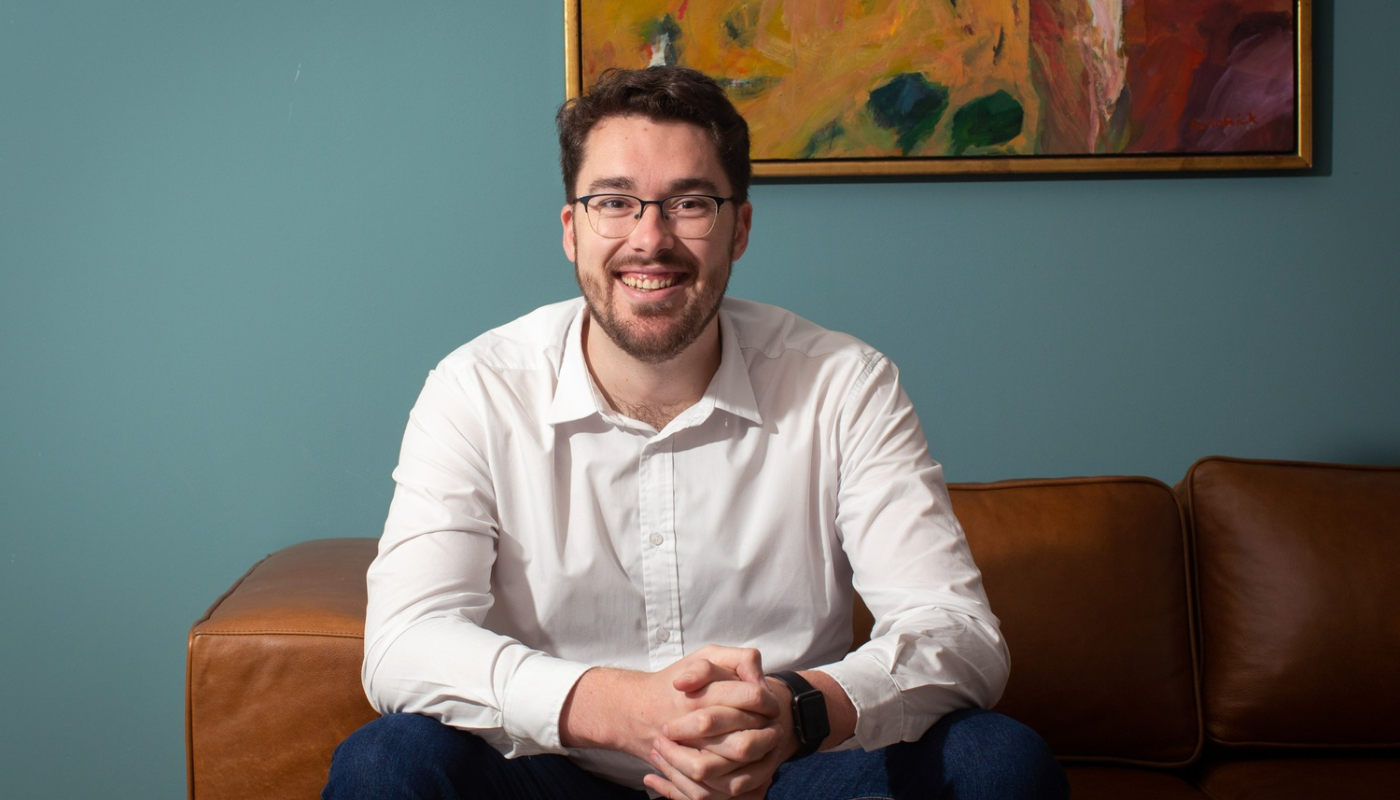
Featuring insights from Brad Latilla-Campbell, country manager at Crimson Education
South Africa’s conversation around AI in education is loud, contested, and far from settled. But while that debate plays out, students applying to international universities are navigating a more immediate concern. Unlike local applications, which do not require a personal essay, institutions in the United States, United Kingdom, and beyond, place significant weight on a student’s ability to write meaningfully about who they are – and as AI makes it easier to produce, it is also making it easier to get wrong.
Many of the world’s top universities have moved away from AI detection software entirely, placing their trust in something far more reliable: human judgment. Sit with ten applications in a row and the patterns become obvious, look at the syntax, structure, or the way ideas are strung together. Regardless of how sophisticated the tool, the result is predictably flat.
A strong academic record gets you into the conversation – it does not get you the offer. I’ve seen students with eight or nine distinctions write essays that say nothing about who they are. And I’ve seen students with slightly lower grades write something so unfiltered and completely themselves, it changes their chances. A perfect academic record means nothing if the essay feels constructed rather than felt.
At top institutions where acceptance rates are as low as three to five percent, the personal statement is often the only opportunity applicants have to speak for themselves. Grades and extracurricular achievements can look very similar across highly competitive candidates, making the essay the place where character, voice, and perspective set one applicant apart from another. Students who rely on AI to write it risk far more than submitting a generic or unconvincing essay – they risk fundamentally misunderstanding what the application process is designed to assess.

Some of the most successful applicants we’ve worked with at Crimson, students who have gone on to top universities like Harvard, Yale, Oxford, and Stanford – have come from students who wrote about things that felt risky to put on the page – questions of identity, of cultural displacement, of not fitting neatly into a single box. That specificity is what makes an essay impossible to forget. And it is the one thing AI will never be able to manufacture.
It is a tension South African universities are navigating too. Institutions including the University of Cape Town, Stellenbosch University, and the University of the Free State have stepped back from policing AI use, choosing instead to guide students on how to engage with it meaningfully/ This shift reflects a growing consensus that the more important question is not whether students use AI, but how. For students applying internationally, that distinction is everything. AI has a role in the process – researching universities, stress-testing ideas, refining structure, but it stops being useful the moment it starts doing the writing.
Crimson Education’s admissions and application counselling model connects students with the world’s top tutors and mentors, providing tailored support to help them reach their personal education and career goals. For more information, visit www.crimsoneducation.org/za.
Share via: