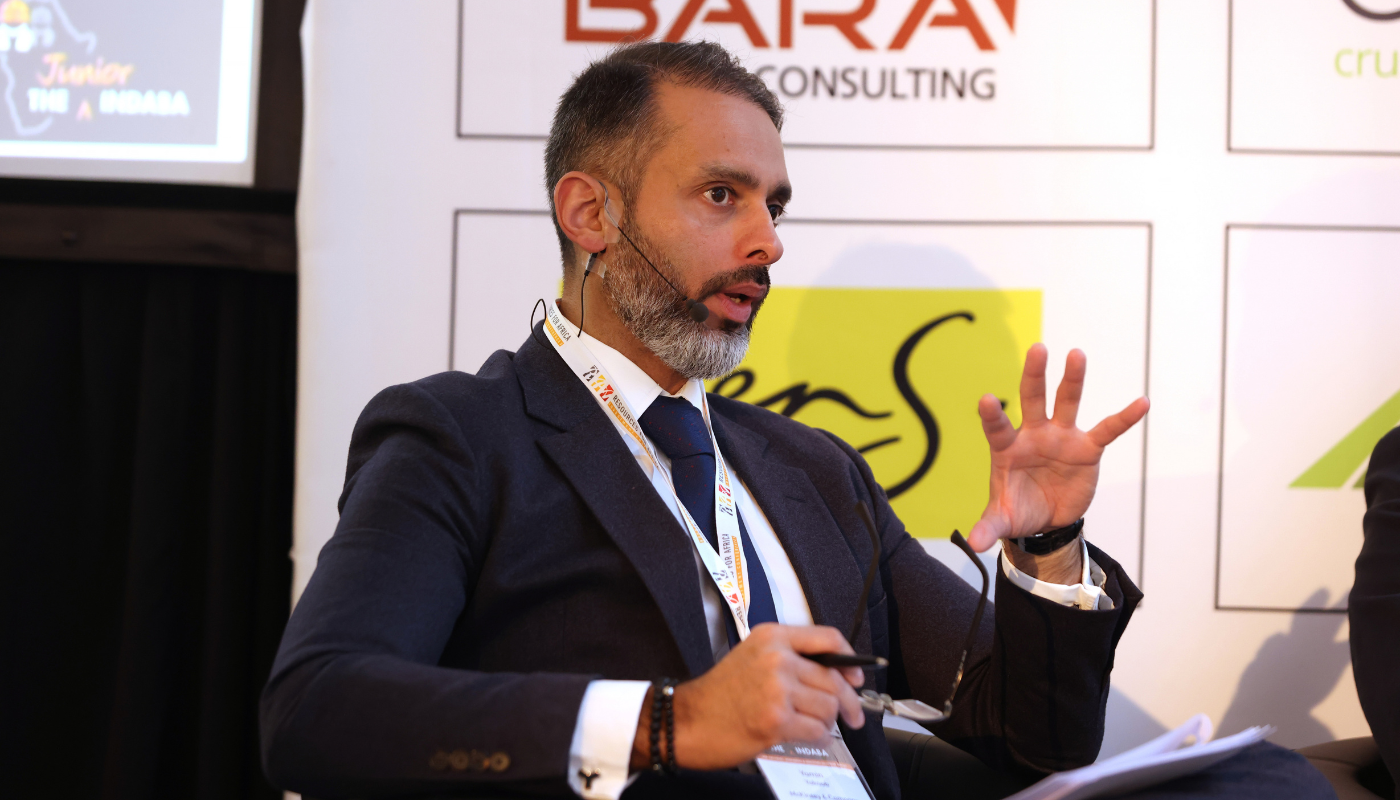
On the second day of The Junior Indaba, in the opening the discussion, Peter Schmitz, Research Director, M&M Demand at Wood Mackenzie, said global commodities markets are entering a phase shaped not only by strong demand, but by growing complexity.
Electrification, digitalisation and the energy transition continue to support structural growth, but geopolitical dynamics and shifting policy priorities are changing where and how capital is deployed.
That is creating significant opportunity, but in a far more selective market where only the most credible, well-positioned projects are likely to secure funding and move into development.
The Junior Indaba held at Country Club Johannesburg in Auckland Park is hosted by Resources 4 Africa, with support from lead sponsors DRA Global and ENS, mining industry partners Anglo American and Minerals Council South Africa, and premium sponsor Rand Mutual Assurance.
It was against this backdrop that day two turned to where opportunity still exists for junior miners, and what companies will need to demonstrate to attract capital in a more selective funding environment.
“More than US$9 billion in critical minerals projects are currently in the pipeline, yet fewer than 10% of those get funded,” said McKinsey & Company Executive Advisor Yamin Yakoob.

Chairing a panel discussion, Yakoob said it is no longer enough for junior miners to have resources in the ground. To secure funding, companies must be able to show how those resources can be converted into clear economic value.
Critical minerals remain one of the strongest investment themes for junior miners globally, but bankability continues to be the central constraint. As delegates heard on the first day of the conference, projects across commodities are still being slowed by long development timelines, high upfront capital requirements and permitting complexity.
Speakers added that the stage between feasibility and final investment decision remains the most difficult to fund, even where commodity outlooks have improved.
Darryll Castle, Director of Operations at TechMet Ltd, said critical minerals projects face added pressure because the chemistry is more complex, processing technologies are still evolving, pricing remains opaque and supply chains are more intricate than in traditional metals.
Panellists also pointed to growing geopolitical challenges. As major powers like China and the US compete to secure critical minerals supply, junior miners must weigh partnerships, funding sources and downstream strategy much earlier in a project’s life.
Other speakers pointed to jurisdictional competitiveness, policy certainty and infrastructure as the factors most likely to influence investment decisions. While Africa’s geological endowment remains significant, they said opportunity is not evenly distributed.
Teheli Morabe, COO of Manganese Metal Company (MMC), said collaboration is essential if smaller players are to develop projects at scale and win investor support. With critical minerals chemistry being far more complex and downstream skills still limited, he said junior miners will need to work together more deliberately.
“We need more collaboration between the smaller players. We don’t need competition, we need collaboration,” he stressed.
On regulatory reform across African jurisdictions, including South Africa’s efforts to reduce reliance on the export of primary mineral and agricultural products and encourage beneficiation, ENS advised junior miners to understand the direction of policy and participate in the development of those reforms where possible.
Zinzi Lawrence, Executive in Natural Resources & Environment at ENS, said that in a market where a valid mining title, environmental approvals and permits effectively underpin project security, junior mining companies can use a strong compliance position to strengthen their investment case.
The message from the conference was clear: capital is still available, but it is being allocated far more selectively. For Africa’s junior miners, the projects most likely to progress will be those that can demonstrate technical credibility, regulatory readiness and a disciplined path to value.
As Bernard Swanepoel, chairman of The Junior Indaba, said during the conference welcome, junior mining is truly where optimism meets geology: “Mining is ultimately a business of faith, patience and perseverance.”
Share via: