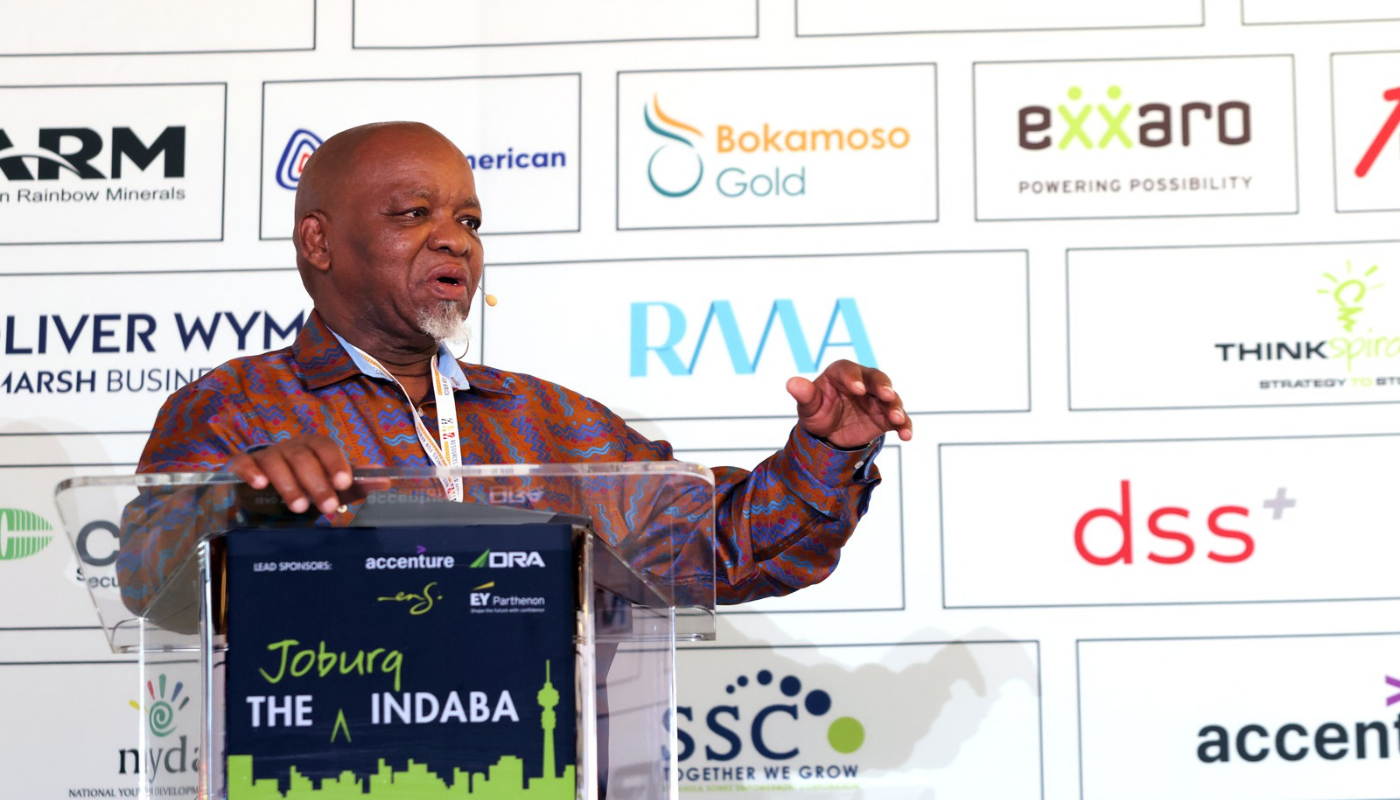
By: Dr Alex Malapane
South Africa presents a macroeconomic profile that appears stable in nominal terms, yet continues to underperform in real economic outcomes. Inflation has declined meaningfully from the post-pandemic peak, interest rates have stabilised after a sustained tightening cycle, and financial markets have largely absorbed global volatility shocks. However, unemployment remains structurally elevated above 31%, with youth unemployment exceeding 46% according to Stats SA. The persistence of this gap between macroeconomic stability and labour market distress signals a deeper problem than cyclical weakness. It reflects a breakdown in the transmission from financial stability to real economic activity.
Headline inflation has eased to approximately 3.1% in 2026, and this places it near the lower bound of the SARB target range of 3% to 6%. The repo rate has stabilised at 6.75% following an extended period of monetary tightening aimed at anchoring inflation expectations. In standard macroeconomic theory, this configuration should support lower real borrowing costs, stimulate investment activity, and improve employment absorption through stronger capital formation. Yet gross fixed capital formation remains below 15% of GDP, significantly below the 25% to 30% range typically associated with sustained job-rich growth in emerging markets.
The core issue is that monetary stability is no longer the binding constraint on South Africa’s growth performance. The constraint has shifted toward structural confidence and institutional execution. Investment decisions are forward-looking and depend less on the nominal cost of capital and more on the predictability of returns. In South Africa, that predictability is weakened by persistent gaps between policy design and implementation.
Policy uncertainty has become a silent tax on investment. While reform agendas are frequently articulated across infrastructure, industrial policy, and public sector reform, execution remains uneven across institutions and time horizons. This creates an environment where firms discount long-term returns more heavily, even in the presence of lower interest rates. The result is subdued capital formation despite improved monetary conditions.
This constraint is reinforced by fiscal inefficiencies. Public debt has risen to approximately 77% of GDP, but the more critical issue is the declining productivity of public expenditure. A significant share of government spending is absorbed by procurement inefficiencies, project delays, and governance breakdowns that reduce the conversion of fiscal inputs into productive infrastructure and services. Auditor-General reports consistently highlight irregular and wasteful expenditure across multiple spheres of government, indicating a persistent erosion of fiscal effectiveness.

In macroeconomic terms, this represents a weakening of the fiscal multiplier. When public spending does not translate into efficient delivery of infrastructure or services, its ability to crowd in private investment diminishes. This has direct implications for productivity, competitiveness, and ultimately employment creation. The economy becomes characterised by rising nominal expenditure but weak real output response.
South Africa’s growth performance reflects this structural constraint. Real GDP growth is projected to remain between 1.4% and 1.8% over the medium term, according to IMF-aligned estimates. At this level of growth, the economy is locked into a low-expansion equilibrium that is insufficient to absorb new labour market entrants at scale. The outcome is persistent unemployment rather than cyclical labour market volatility.
The labour market outcome should therefore not be interpreted primarily as a demand deficiency problem. It is better understood as a structural productivity and investment constraint. Monetary policy has succeeded in anchoring inflation expectations and stabilising financial conditions, but it has not altered the underlying production capacity of the economy. The transmission mechanism from financial stability to real economic expansion remains weak.
This disconnect is also visible in investment behaviour. Firms are not primarily constrained by access to credit. They are constrained by uncertainty regarding institutional reliability, infrastructure functionality, and policy continuity. In such an environment, lower interest rates have a limited effect because the dominant variable in investment decisions becomes execution risk rather than financing cost.
The implications extend beyond conventional macroeconomic analysis. The Constitution of the Republic of South Africa, 1996 establishes in Section 1(a) that South Africa is founded on “human dignity, the achievement of equality and the advancement of human rights and freedoms.” Section 7(2) further provides that the state must “respect, protect, promote and fulfil the rights in the Bill of Rights.” While these provisions are not economic instruments in the narrow sense, they establish a developmental obligation that includes substantive economic inclusion.
From this perspective, persistent unemployment above 30% represents more than a labour market inefficiency. It reflects a structural gap between constitutional developmental intent and economic outcomes. Macroeconomic stability without economic inclusion creates a situation where formal economic conditions improve while substantive participation remains constrained.
This is where South Africa’s central economic challenge becomes clear. The country has largely succeeded in stabilising inflation and maintaining monetary credibility. However, it has not succeeded in translating that stability into investment expansion, productivity growth, and employment creation.
Addressing this requires a shift in focus away from monetary calibration toward execution capacity. Infrastructure systems must function as enablers of economic activity rather than constraints on it. Public expenditure must be evaluated by its economic return rather than its scale. Policy consistency must be strengthened not through additional frameworks, but through reliable implementation across institutions.
South Africa’s current macroeconomic position can therefore be described as one of financial stability coexisting with structural stagnation. Inflation is anchored, interest rates are predictable, and financial markets are stable. Yet the real economy remains constrained by weak investment responsiveness, institutional inefficiency, and limited employment absorption.
Until the transmission mechanism between macroeconomic stability and real economic activity is restored, lower inflation and stable interest rates will remain necessary conditions for stability, but insufficient conditions for meaningful job creation and inclusive economic growth.
Share via: