By Dean Muruven, Associate Director, BCG South Africa
South Africa’s water crisis has shifted from a service delivery challenge to a material economic constraint. It is increasingly shaping investment decisions, threatening supply chains, and eroding confidence in the country’s growth trajectory. The State of the Nation Address signalled a turning point: a structural shift in how government intends to enforce accountability, protect core revenues, and coordinate delivery in the water sector. Budget 2026 further reinforces this shift toward enforcement as treasury highlighted how weak reinvestment has fuelled service failures like Johannesburg’s R11.9 billion in water revenue but only R1.3 billion allocated to capital investment.
For business leaders, investors, and lenders, this creates a moment of clarity an environment where water resilience is not only necessary risk management, but an investable, economically rational opportunity.
The reforms outlined: licence withdrawal for non-performing water service providers, criminal charges for municipal failures, ringfenced water revenues in metros, and the establishment of a National Water Crisis Committee introduce the accountability backbone the sector has long lacked. These changes do more than tidy up governance; they materially affect counterparties’ risk profiles and begin to send the right signals to the market. Investors have always been concerned about weak municipal performance. But when compliance is audited, revenues are protected for maintenance and upgrades, and underperforming entities face real consequences, the conversation shifts from “will this collapse?” to “where are the bankable opportunities?”
The newly announced R27.7 billion performance‑linked framework for metros now ties funding to operational delivery, embedding the accountability spine the sector has lacked. These reforms also land against the backdrop of a significant financing shortfall. The water sector needs roughly R900-billion over the next decade, and public sources can supply only about 30%. That gap is not manageable without private capital, but it does require a shift from seeing the water crisis as an engineering challenge to a strategic resilience opportunity Fortunately, the economics support participation: resilience investments in water and infrastructure deliver returns that typically deliver three to five times returns on investment as validated by the IFC and World Bank assessments across emerging markets. These are not green‑washed arguments; they are grounded in avoided operational losses, asset value protection, and the stability of supply chains that depend on reliable water services.
Water scarcity will intensify significantly over the next decade, with a disproportionate impact on smaller enterprises. The greatest exposure sits with SMMEs which account for roughly 40% of GDP and over 60% of employment, particularly those clustered in high-stress provinces (Gauteng, KZN, Western Cape). When they face water disruptions, systemic effects compound rapidly through supply chains and municipal tax bases alike. Large corporates that invest in resilience both for themselves and through localised partnerships reduce economy-wide fragility, not just their own downtime.
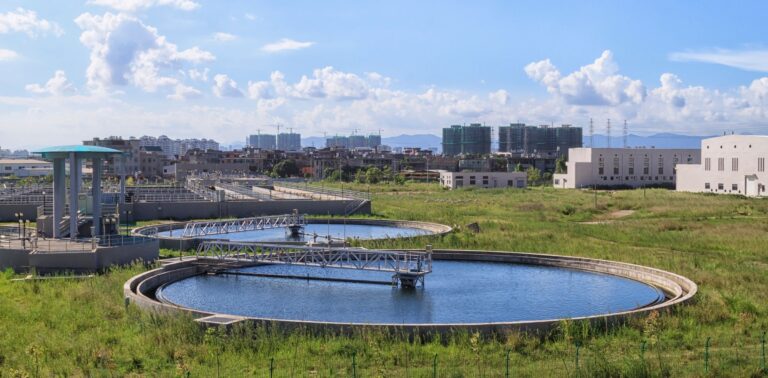
In this environment, corporate boards should reframe how they think about water: from a compliance issue to an investment thesis. There are multiple investable opportunities companies can pursue including: onsite treatment and reuse systems; alternative storage solutions; supply diversification and digital and tech enabled water management. The first step however is to conduct location-specific risk assessments.
Manufacturing hubs in Gauteng, mining operations in the North-West, and agricultural producers in the Western Cape face very different pressure points. Tailored investments across the water value chain unlock value pools through operational continuity and reduced exposure to interruption. These are foundational, not optional.
Beyond internal resilience, companies should look at where municipalities are signalling readiness to partner. The national incentive programme that rewards metros for ringfencing water revenues is a powerful differentiator. Municipalities that demonstrate audited compliance will attract capital first, because investors can trust that funds for pipes, pumps, and reservoirs are being reinvested rather than diverted. For business, this creates a new screening tool: choose to collaborate where water governance is improving and where government’s incentives help reinforce good behaviour.
Budget 2026 has now formalised ringfencing as national policy, with metros such as Johannesburg and eThekwini already implementing plans to reinvest water revenues directly into the service, providing investors with the predictability they have long sought – water revenue must fund water reliability.
A particularly important reform is the streamlined, lighter-touch PPP process for projects below R2 billion. These mid-sized, modular projects are ideal for standardisation and replication across municipalities. The energy sector’s experience is instructive: South Africa ended load shedding not through a single megaproject, but through cumulative small-scale interventions. Water can follow the same playbook: pressure management systems, district metered areas, and smart zones can be standardised, permitted, and deployed rapidly across municipalities. With water being local or hyperlocal there exists major potential to build a portfolio of investable, de-risked municipal projects.
This momentum has been accelerated with Budget 2026 outlining that 63 PPP projects are advancing under streamlined rules that shorten timelines and reduce uncertainty. In addition, and critical for scaling standardised, mid‑sized water interventions it was announced that municipal PPP regulations will be finalised by June 2026.
For lenders and investors, due diligence criteria should evolve accordingly. Licence-withdrawal risks must be assessed not just as threats, but as indicators of whether the regulatory environment supports accountability. Revenue ringfencing must become a non-negotiable covenant. Municipal non-revenue water trajectories should be scrutinised, because improving these is often the fastest route to restoring financial sustainability. And PPP readiness specifically with projects that can move quickly through the new streamlined thresholds should be a major screen for prioritisation. The reforms don’t eliminate risk, but they give it shape and predictability.
Boards should also take seriously the broader economic benefit of early action. Resilience investments create local employment, stabilise municipal revenues, and protect vulnerable suppliers while also sending a critical signal to the market that the private sector is prepared to partner in delivery. This matters for confidence. When investors see disciplined, replicable models emerging in multiple cities, confidence builds not just in water security, but in the country’s broader reform trajectory.
This is reinforced by Treasury’s commitment to more than R1 trillion in public‑sector infrastructure spending over the medium term, positioning water resilience as a foundational economic stabiliser.
The inclination to wait for large inter-basin transfers and new dam projects is understandable but ultimately misguided. Megaprojects take years, sometimes decades, to reach completion. The reforms announced in the SONA allow us to buy time by scaling decentralised, modular solutions immediately. We have an opportunity to deploy innovative water management solutions that align with our governance framework and development trajectory. South Africa’s energy turnaround came not from a single intervention, but from the cumulative impact of policies that unlocked private investment. Water can follow the same playbook but only if business takes the lead now.
If we get this right, South Africa’s water story can shift from fragility to investability. The accountability era is beginning to take shape. Enforcement, revenue protection, and national coordination are the scaffolding we have been waiting for. They will not fix everything, but they change enough to justify action now. The business community has a critical role to play investing in resilience that protects operations, strengthens municipalities, and attracts the capital needed to close the long‑standing funding gap.
The window is open. The question is whether we use it.
Share via: